



Used washing machine dark disease detection guide


Summer in Boise and its surrounding areas like Meridian, Nampa, and Caldwell can be a delightful time for relaxation and enjoyment. At Appliances 4 Less Boise, we believe your home appliances can play a significant role in simplifying your summer activities. Here’s how you can leverage these tools to enhance your summer experience, even with appliances that are open box, scratch, and dented.
In the transaction of second-hand washing machines, the biggest risk is often not the wear and tear on the surface or the traces of the year, but the “dark injuries” hidden inside “. An unknown transportation bump and a violent impact may bury hidden dangers in this seemingly normal machine. This article disassembles the system 5 a detection method for hidden dangers, which can help you penetrate the appearance, gain insight into the real state and avoid the embarrassing situation of “it can be used when you buy a second-hand washing machine, but it will be bad soon when you use it.
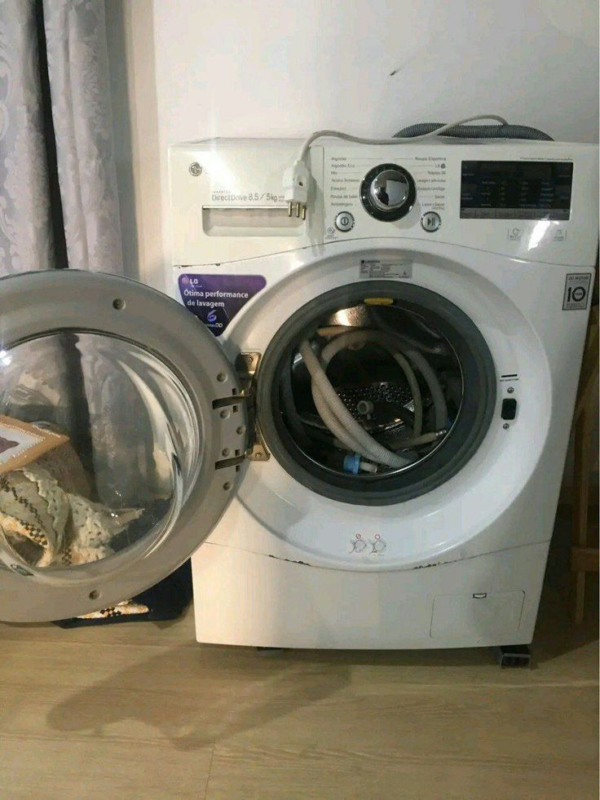
(1) What is a dark disease?
Dark disease refers to internal structural damage or loose connections caused by severe impact and vibration. These damages behave normally during static testing, but will gradually be exposed under long-term use, specific load or continuous vibration, resulting in performance degradation or sudden failure.
(2) Dark disease 1: structural internal injury
Side or top impact may cause deformation of the internal support frame of the washing machine or micro-cracking of the solder joints, which will not affect the activity in the short term, but long-term load-bearing will cause problems.
3 step detection method:
1. Hand feeling detection
Use your palm to stick flat on the washing machine box, especially the peripheral area of the dent, and slide slowly.
①. Normal
Washing machine appearance flat without exception.
②. Abnormal
The appearance of the washing machine has irregular concave-convex or wavy deformation. This indicates that the internal support may have problems such as bending deformation.
2. Level test
Place the spirit level on the four corners and positive center of the top cover of the washing machine. If the bubble is substantially centered at each location, the machine has been placed smoothly. If there is a significant difference in levelness at different positions, this indicates that the machine base or box may be deformed due to impact, resulting in the four feet of the washing machine not being coplanar. This is one of the culprits of the violent vibration of the washing machine in the future.
3. Press and force test
Press the top cover of the washing machine and all the panels by hand.
①. Normal
Sturdy, almost no sag, no murmur.
②. Abnormal
Feel the structure loose, or accompanied by “crunch” metal friction sound. This means that the fixing brackets or screws may be loose.
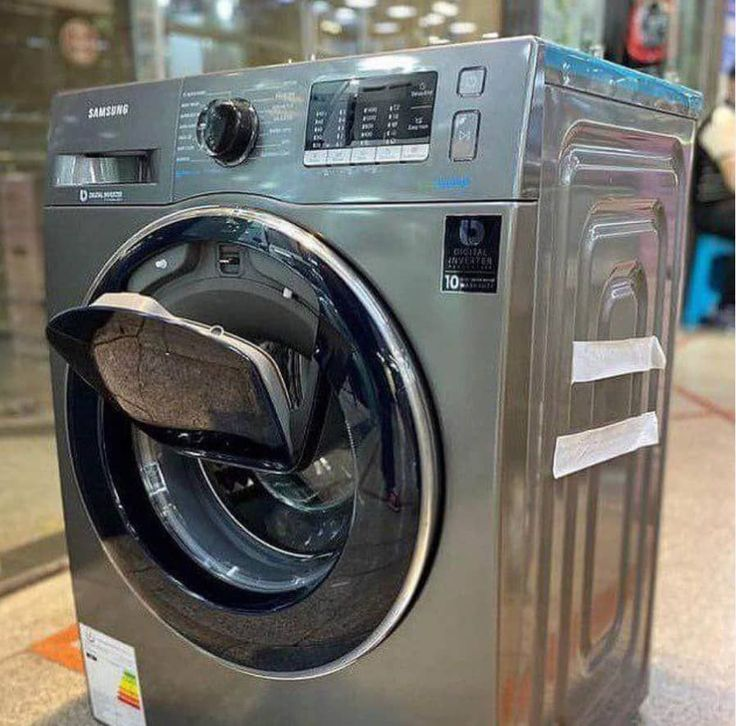
(3)、Dark disease 2: shock absorption system dark damage
The suspension spring, damper and balance weight are the shock absorption core of the washing machine. Severe bumps may cause spring fatigue, damper oil leakage, or cracking of the balance weight (those heavy concrete or iron blocks).
Key tests:
1. inner barrel shaking test (the most effective):
Open the door, grasp the edge of the inner barrel with both hands, and shake it vigorously in all directions. Normal condition:
①. There should be moderate resistance.
②. After loosening, the inner barrel shall return smoothly without excessive shaking.
③. No abnormal noise at all.
If you feel loose, “click” or return to position slowly, the suspension system is likely to be damaged.
2. no-load dehydration monitoring test:
Set the “single dehydration” program and let the empty washing machine spin at high speed. Keep your ears close to the fuselage (but at a safe distance):
①. Normal sound
Smooth wind noise and motor running sound, smooth speed rise process.
②. Danger sound 1 (low impact)
Periodic “thumping” sounds, like a heavy object rolling and hitting. This is most likely to be the balance of the broken or fixed bolts loose, debris rolling in the barrel.
③. Danger sound 2 (sharp friction)
Continuous “squeaking” or “rustling” friction. This may be that the inner barrel is slightly deformed due to impact and rubbed to the outer barrel during high-speed rotation.

(4)、Dark disease 3: hidden danger of waterway system
Tipping or bumping of the machine may cause the inner hose to bend, press, or loose joints. This kind of problem does not leak at the beginning, but with the change of water pressure and machine vibration, it may suddenly leak after several months.
Process tests that must be performed:
Run a complete “quick wash” program (15-30 minutes), focusing on three points:
1. intake stage
Listen to the sound of the water inlet valve, it should be a smooth “buzzing” sound. If there is a sharp “hissing” sound, there may be a hidden danger at the joint.
2. drainage stage
Observe whether the drainage is strong and smooth. If the drainage is weak or intermittent, the drainage pipe may be crushed or the drainage pump may be damaged.
3. Check immediately after the procedure:
①. Whether there is water on the ground directly below the machine.
②. Whether there is water in the rubber ring of the door seal (especially the lower part).
③. Whether there are splashing water marks in the corner behind the machine.
(5)、Dark disease 4: sequelae of circuit system vibration
Severe vibration may cause loose connectors on the circuit board and virtual welding of components. This kind of problem is the most difficult, manifested as intermittent failure-normal today, may strike tomorrow, may return to normal after repair.
Targeted testing:
1. tap test method
While the washing machine is performing the washing process, gently tap the control panel and sides of the body with your knuckles. Observations:
①. Does the display flicker
②. Whether the program is paused or reset
③. Whether the motor stops
Note: the intensity should be light, to avoid the detection of poor contact, damage to the test.
2. program stress test
Switch different programs (cotton and linen → fast washing → single dehydration → wool) continuously and quickly, and observe whether each switch responds quickly and accurately without any delay or error prompt.
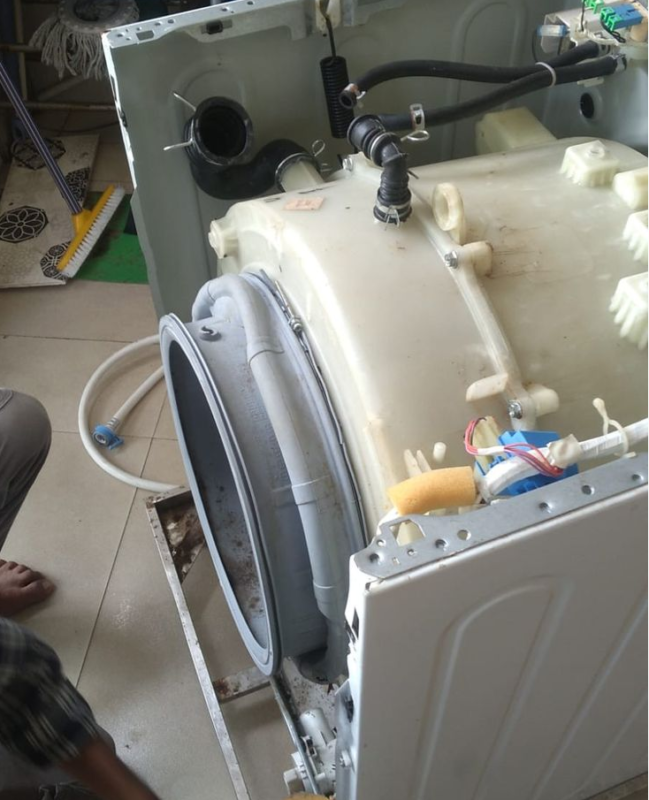
(6)、Dark disease 5: long-term hidden danger of motor and transmission system
The deformation of the box may cause the motor mounting base to shift, or the tension of the drive belt to change (too tight to accelerate wear, too loose to slip). These do not affect the initial operation, but significantly shorten the life of the core components.
Detection method (advanced judgment):
1. listen to the start-up moment
When no-load dehydration is started, the motor should be accelerated smoothly without obvious “cough” starting difficulty sound.
2. discrimination and analysis of high-speed running sound
During the high-speed rotation of dehydration, the sound should be continuous and stable “wind sound” or “motor sound”, and should not be mixed with periodic “rustling” friction sound or “buzzing” resonance sound.
Conclusion
Choosing a second-hand washing machine is essentially a trade-off between value and risk. Through the detection methods of structure, shock absorption, waterway, circuit, transmission 5 large systems, you have mastered the tools to evaluate their true health status. . May this guide help you to develop your eyes and find the treasure washing machine that is practical, durable and value-for-money in the second-hand market, so that every cleaning has no worries.


