



Evolution History of Freezer Defrosting Technology

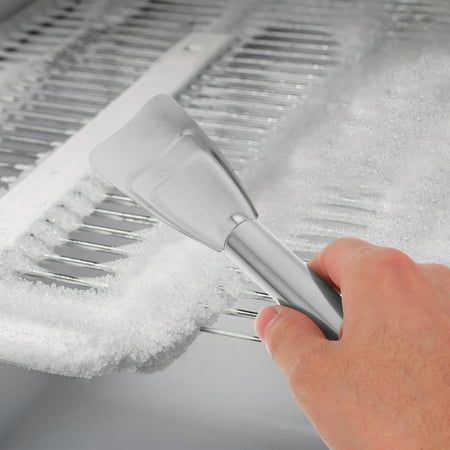
Summer in Boise and its surrounding areas like Meridian, Nampa, and Caldwell can be a delightful time for relaxation and enjoyment. At Appliances 4 Less Boise, we believe your home appliances can play a significant role in simplifying your summer activities. Here’s how you can leverage these tools to enhance your summer experience, even with appliances that are open box, scratch, and dented.
The evolution of freezer defrosting technology is a micro history of human pursuit of life convenience and preservation science. From the heating and defrosting that needs to be started manually to the precise control system that combines multi-sensors and intelligent algorithms, every innovation has continuously improved the preservation efficiency and use experience while solving the limitations of the previous generation.

(1)、Semi-automatic defrosting technology
In the mid-1950s, with the popularity of bimetallic thermostats and timers, semi-automatic defrosting technology came into being.
1. technical principles
①. heating wire defrosting method
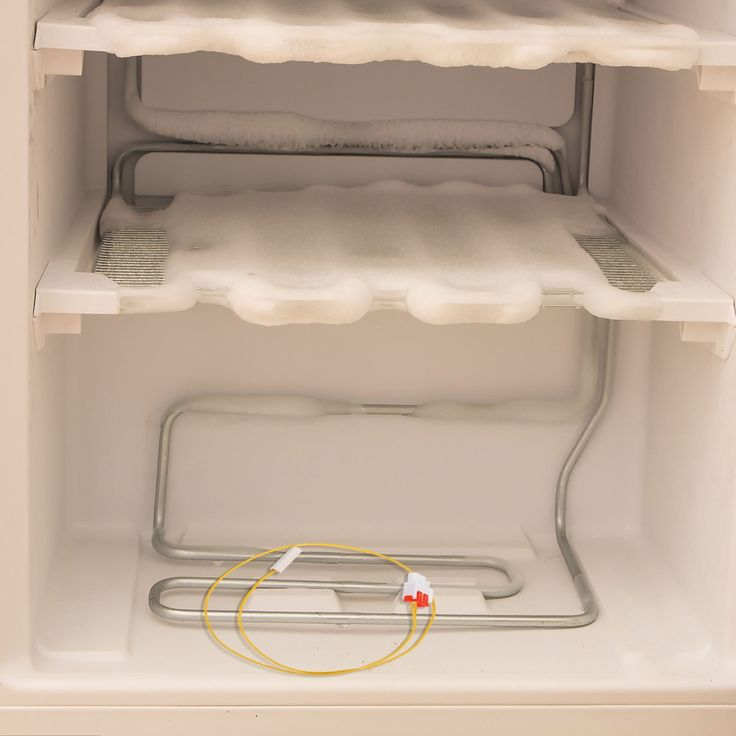
Install a heating wire near the evaporator, and heat and melt the frost layer by timer control (usually every 8-12 hours).
②. Hot gas bypass defrosting
The high-temperature and high-pressure refrigerant generated by the compressor is directly introduced into the evaporator to melt the frost layer by heat.
2. technical advantages
①. Significantly reduces the user’s workload.
②. The defrosting process is safer and reduces the risk of equipment damage.
③. The defrosting time is controllable, and the freezer does not need to be completely emptied. Users can plan to defrost when there is less food in the freezer.
3. technical limitations
①. The defrosting process still needs to be started manually.
②. During defrosting, the temperature in the freezer will rise significantly (usually above 10 ℃), affecting the quality of food.
③. The power consumption increases (heating wire power is usually 300-600 watts).
④. The heating element may be damaged and there is a safety hazard.
The semi-automatic defrosting technology still needs manual intervention, and the temperature fluctuation problem in the defrosting process has not been fundamentally solved, and it gradually withdraws from the household freezer market.

(2)、Automatic defrosting technology
In the early 1960 s, fully automatic defrosting technology began to be used in household freezers.
1. technical principles
The system monitors the evaporator temperature or running time. When the frost layer reaches a certain thickness, it automatically switches the compressor to stop cooling and starts the electric heating tube inside the evaporator. After heating and melting the frost layer, the system automatically discharges the defrost water and resumes refrigeration.
2. major Breakthroughs
①. Truly realize the defrosting without manual intervention.
②. More precise temperature control and drainage systems were introduced.
③. The defrosting cycle is more scientific and reasonable.
3. technical advantages
①. Completely free the user’s hands.
②. Optimized defrost cycle reduces energy waste.
③. The temperature stability in the box is significantly improved (fluctuation is controlled within ± 2 ℃).
4. technical limitations
①. Electric heating defrosting consumes additional electricity, accounting for about 15-20% of the total energy consumption of the refrigerator.
②. Regular heating causes the humidity in the box to drop and accelerates the loss of moisture from unpackaged food.
③. Increase the electric heating tube, temperature controller and other components, the failure rate increased.
Fully automated defrosting technology is quickly becoming mainstream, but engineers are still exploring ways to be more energy efficient and have less impact on food temperature.
(3)、Air-cooled frost-free technology
In the 1980 s, air-cooled frost-free technology began to be used in high-end freezers, and gradually became popular after the 1990 s.
1. technical principles
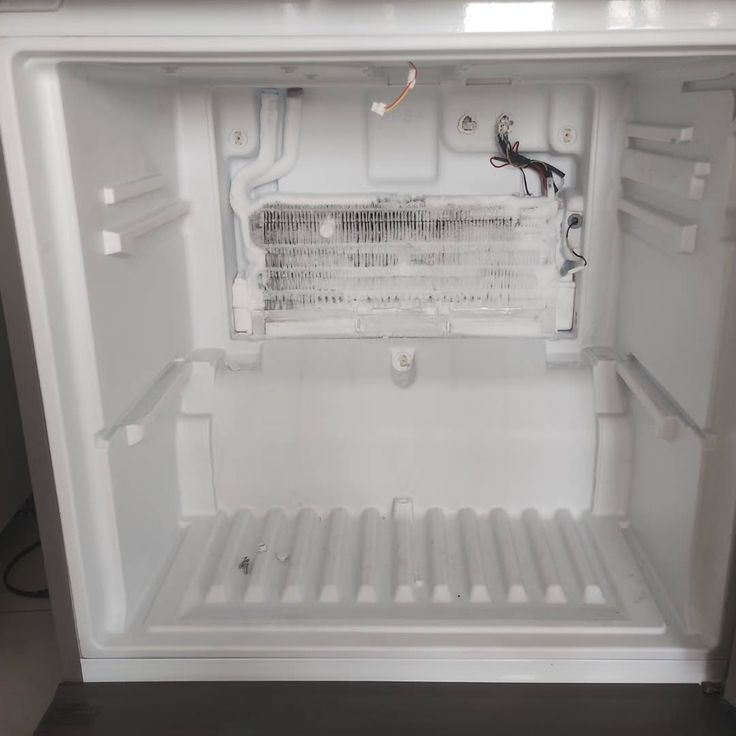
Air-cooled frost-free technology has completely changed the traditional defrosting ideas. It uses an independent evaporator (usually hidden at the back or top of the freezer) to circulate cold air into the freezer compartment through a fan. In addition, since the evaporator is not in direct contact with the food storage space, substantially no frost is formed in the freezing chamber.
2. core Innovation
①. Separate evaporator: The evaporator is placed in an independent air duct and does not come into contact with food.
②. Intelligent air duct design: precise control of airflow in different temperature zones through the damper.
3. technical advantages
①. A truly frost-free experience
The frost is completely invisible to the user and there is no need to perform any defrost operation.
②. Temperature uniformity improvement
Forced circulation reduces the temperature difference in the box from ± 5°C to ± 2°C.
③. Energy efficiency improvements
Compared with regular defrosting, energy consumption is reduced by about 15-20%.
4. new limitations emerge
①. Food dry easily
The continuous air flow accelerates the evaporation of water on the surface of the food materials, and the unsealed food is easy to be dehydrated.
②. Noise problem
The fan running produces additional noise (usually 3-5 decibels).
③. Complexity and cost
System complexity has increased significantly, the number of failure points has increased, and maintenance costs have risen.
With the continuous improvement of consumers’ requirements for fresh-keeping effect and
precise control, simple frost-free can no longer meet expectations. Air-cooled systems need smarter brains.
(4)、Intelligent defrosting system
At the beginning of the 21st century, the decline in microprocessor costs and the maturity of sensor technology gave birth to intelligent defrosting systems. Based on the air-cooled frost-free architecture, the intelligent defrost system upgrades the control logic from time to status.
1. technical principles
Intelligent defrosting system through the built-in temperature, humidity and frost layer thickness sensor real-time data collection, and intelligent analysis by the microprocessor, so as to accurately determine the actual demand for defrosting, only when necessary to start efficient defrosting program, to achieve accurate automatic defrosting.
2. core Breakthrough
①. sensor fusion
The system integrates multiple temperature sensors, humidity sensors, and even door magnetic sensors.
②. algorithm driven
The microprocessor analyzes the data in real time and comprehensively judges the thickness of frost layer.
③. demand trigger
Only when it is determined that it is really necessary (the frost layer reaches the best defrost thickness), defrost is started, and the power and time of defrost heating can be dynamically adjusted.
3. advantages
①. Avoid unnecessary defrost cycle, energy saving effect is significant (usually can save 5%-15%).
②. Minimize the temperature fluctuation and air-conditioning interruption caused by defrosting, and the temperature control is more accurate and stable.
4. current Limitations
①. The complexity of the electronic control system is high, and the maintenance cost is increased.
②. The sensor may fail, causing the system to fail.
③. The price is significantly higher than the traditional system.
5. future development direction
In the future, the intelligent defrosting system will develop in the direction of predictive maintenance that is deeply integrated with artificial intelligence and the Internet of Things, and realize adaptive defrosting with near zero energy consumption.
Conclusion
From manual intervention to automatic, and then to intelligent perception, the history of the development of freezer defrosting technology is a micro-technological revolution around energy saving, preservation and convenience. Although there are still challenges, with the deep integration of artificial intelligence and the Internet of Things, the future defrosting system will be more intelligent, efficient and adaptive to protect the freshness and quality of life of food materials in a silent manner.


