



Dishwasher 5 big purchase elements

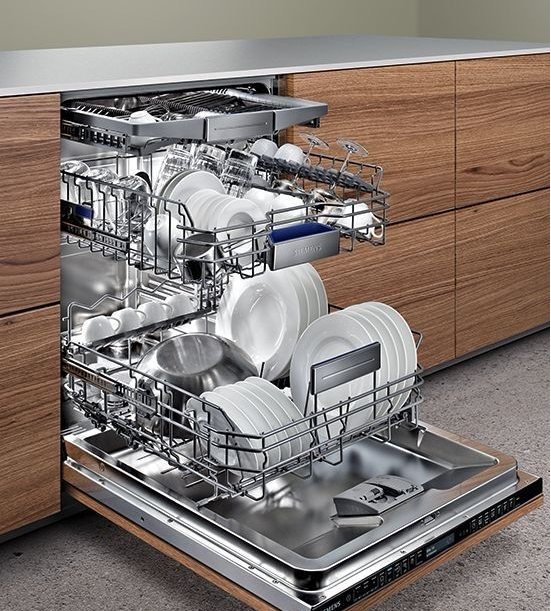
Summer in Boise and its surrounding areas like Meridian, Nampa, and Caldwell can be a delightful time for relaxation and enjoyment. At Appliances 4 Less Boise, we believe your home appliances can play a significant role in simplifying your summer activities. Here’s how you can leverage these tools to enhance your summer experience, even with appliances that are open box, scratch, and dented.
Have you ever been annoyed because of the insufficient capacity of the dishwasher and frequent batch cleaning? Or regret because the style does not match the kitchen space? When choosing a dishwasher, you need to jump out of the misunderstanding that the bigger the better, and you need to consider the family needs, space layout and technical characteristics. This article will build a scientific purchase framework for you from the 5 dimensions of capacity, style, disinfection, cleaning and drying to help you choose the most suitable dishwasher.
(1) Capacity selection
1.1-2 person family: it is recommended to choose 4-6 sets of capacity models. This specification can meet the daily needs of simple meals and a small amount of tableware cleaning, avoid water and electricity waste due to excessive capacity, and save kitchen space.
2.Families of 3-5 people:: 8-10 capacity models are recommended. These models can accommodate conventional dishes and small pots and pans, suitable for family daily meals and small dinner scenes, balancing capacity and energy consumption needs.
- Families of 6 and above: more than 12 large-capacity models need to be selected. Large capacity models can accommodate large pots and multiple sets of tableware, suitable for frequent dinners or large population of families, to avoid frequent batch cleaning cumbersome.
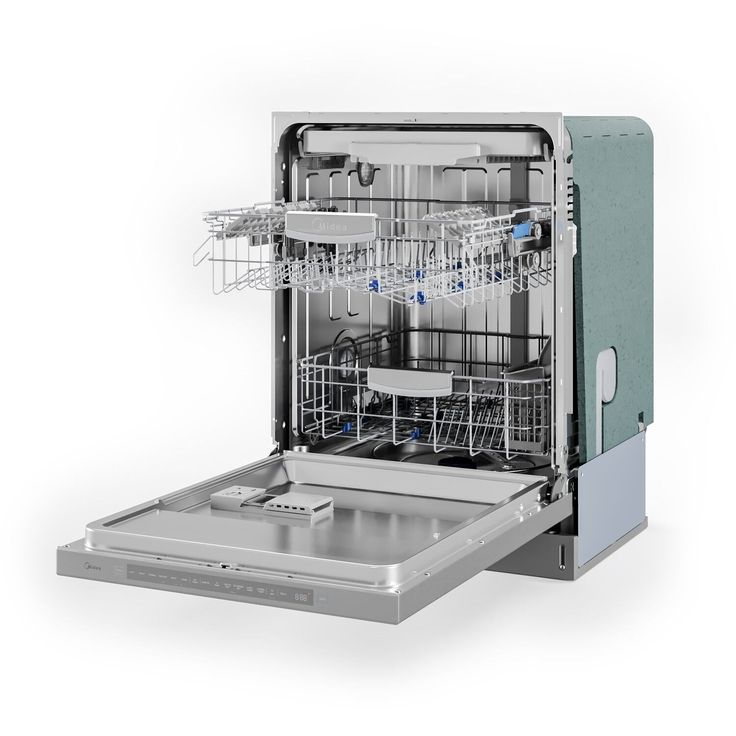
(2)、style selection
1. Desktop dishwasher
Advantages: convenient installation, no need to transform the kitchen, suitable for renovated families or small apartments.
Disadvantages: small capacity, can only accommodate 6 sets of tableware, and occupy the table space, affecting the efficiency of kitchen operation.
2. Sink dishwasher
Advantages: Integrated design with the sink, saving space, suitable for 1-3 families.
Disadvantages: high maintenance costs, and occupy operating space, may affect the normal use of the sink.
3. Fully built-in dishwasher
Advantages: integrated with the cabinet, beautiful and generous, suitable for newly decorated families, large capacity.
Disadvantages: water and electricity and opening size need to be planned in advance, the installation cost is high, and the maintenance is relatively complicated.
4. Freestanding dishwasher
Advantages: large capacity, suitable for decorated families, can be flexibly placed.
Disadvantages: occupy floor space, may affect the overall appearance of the kitchen.
5. Can be independently embedded dual-purpose dishwasher
Advantages: both flexibility and large capacity, suitable for the pursuit of multi-functional needs of the family.
Disadvantages: the price is higher, and need to consider the dual needs of installation and placement.
(3) Disinfection method
Ultraviolet disinfection: through ultraviolet radiation damage bacterial DNA structure, to achieve bactericidal effect. Safe and no residue, but to ensure that the tableware is fully exposed, to avoid dead residue.
Hot water disinfection: the use of 60-75 ℃ high temperature to destroy the bacterial structure, the sterilization effect is remarkable and the cost is low. However, the energy consumption is high, so it is necessary to pay attention to the water temperature control to avoid the damage of the tableware.

(4) Cleaning method
Spray cleaning achieves 360°washing through high-pressure water flow and chemical cleaning agent. With three-layer spray arm and adjustable bowl basket, it can cover every corner of tableware. Ultrasonic cleaning is rare, suitable for special material tableware. It is recommended to choose a model with soft water function to avoid scale accumulation and affect the life of the machine.
(5) Drying function
1. Hot air drying
Principle: through the built-in fan suction outside air, the PTC heating module or heating wire to 80-100 ℃, the formation of high temperature hot air circulation. The hot air penetrates the tableware gap to accelerate the evaporation of water, and the moisture is discharged through the exhaust port. Some models are designed with double fans, and the air inlet and outlet circulate independently to improve the drying efficiency. The external circulation system introduces the air in the static area of the cabinet, which is filtered by the filter screen and heated to avoid secondary pollution. The internal circulation system uses the air in the cavity to repeatedly heat, and reduces the exhaust air temperature to below 40 ℃ through the condensing device to prevent scalding the cabinet.
Advantages: fast drying speed, suitable for humid environment; The temperature can be accurately controlled to 135 ℃ to realize high temperature sterilization.
Disadvantages: The fan operation produces 30-50 decibels of noise, and the energy consumption is 15%-20% higher than that of the condensing type; Long-term use requires regular cleaning of the air inlet filter screen to avoid dust accumulation affecting the air volume.
2. Condensation drying
Principle: The electric heating tube heats the air to 60-70°C, and the hot air flows through the surface of the tableware to absorb moisture and enters the condenser. The condenser is rapidly cooled by metal fins, so that the water vapor in the hot and humid air is condensed into liquid water and discharged through the drain pipe. Some models adopt a closed-loop cycle design, and the dried air is reheated to participate in the drying again to form an energy cycle.
Advantages: simple structure, low maintenance cost; no fan design, silent operation.
Disadvantages: Energy efficiency is significantly affected by environmental humidity. When the humidity is more than 70%, the condensation efficiency decreases by more than 30%. High temperature can easily lead to deformation of plastic tableware, and temperature fluctuation should be controlled within 5 ℃.
3. Heat exchange drying
Principle: The air fin heat exchanger is used to improve the thermal efficiency through the dual effects of heat conduction and convection. The surface of the heat exchanger is covered with aluminum fins, increasing the heat transfer area to 3 times that of traditional equipment, so that the heat energy is quickly transferred to the air. When the hot and humid air flows through the fin gap, the heat is efficiently recovered, and the water vapor is liquefied and discharged in the condensation zone.
Advantages: The heat exchange efficiency is more than 95%, which is 20% more energy-saving than the traditional condensing type; The structure is compact and adapts to the installation requirements of embedded models.
Disadvantages: The fin gap is easily blocked by oil and needs to be maintained every 3 months with a special cleaning agent; the initial manufacturing cost is 30% higher than that of the condensing type.
4. Automatic door drying
Principle: After the high temperature washing program is over, when the internal temperature of the dishwasher drops to 55 ℃, the hatch will automatically open the gap of 10-20cm. The temperature difference between inside and outside is used to form air convection, and the moisture is discharged through natural diffusion. Some models are equipped with temperature and humidity sensors to dynamically adjust the opening angle and time to achieve precise humidity control.
Advantages: energy saving effect is remarkable, compared with hot air type power saving 40%; no fan design, operating noise is less than 20 decibels.
Disadvantages: humid environment (such as the south back to the south) is easy to cause secondary tide return; After opening the door, it needs to be manually closed, and the degree of automation is lower than that of hot air type.

Conclusion
The purchase of dishwashers needs to return to the actual needs of the family, taking into account the 5 elements of capacity, style, disinfection, cleaning and drying. Only by comprehensively considering and weighing the major elements of the dishwasher can we choose the most suitable dishwasher to make kitchen life more efficient and healthier.


