



Six major Faults of Microwave Ovens and Their Solutions

Summer in Boise and its surrounding areas like Meridian, Nampa, and Caldwell can be a delightful time for relaxation and enjoyment. At Appliances 4 Less Boise, we believe your home appliances can play a significant role in simplifying your summer activities. Here’s how you can leverage these tools to enhance your summer experience, even with appliances that are open box, scratch, and dented.
Microwave ovens as high-frequency devices used in modern kitchens, have complex electromagnetic structures that can easily cause six typical faults such as no heating and abnormal noise. This article helps you achieve the double guarantee of “self-troubleshooting + precise repair” by sorting out the causes of faults and scientific solutions.
1. In-depth Analysis of Non-heating faults
Root causes: Magnetron aging (filament resistance > 2Ω), high-voltage capacitor breakdown (capacity deviation more than 20%), poor contact of door interlock switch (contact resistance > 5Ω), power supply voltage fluctuation (protection initiated when < 180V).
Solution:
Magnetron testing requires a megohmmeter to test the insulation resistance between the filament and the anode (≥100MΩ), and replace the magnetron of the same model if abnormal;
For high-voltage capacitance testing, use the capacitance range of a multimeter to measure the capacity (normal value 0.8-1.2μF). If the deviation exceeds 20%, replace it.
When inspecting the door switch, adjust the tension of the spring and clean the oxide layer to ensure that the contact pressure meets the standard;
Power supply issues require voltage stabilizers to avoid voltage fluctuations triggering protection mechanisms.
2. Anomalous noise Source tracing and control
Noise sources: Wear of cooling fan bearings (abnormal noise at speed > 3000rpm), eccentricity of turntable motor (abnormal winding resistance), loose transformer core (electromagnetic noise > 45dB), high-frequency oscillation of high-voltage rectifier (whistling > 20kHz).
Solutions:
Fan maintenance requires disassembling the motor, replacing the wear-resistant bearings and adding high-temperature resistant grease;
Turntable motor inspection requires testing the winding resistance value (normal value 100-500Ω), and replacement if abnormal;
For transformer fixation, check the core fastening screws and add shock-absorbing rubber pads;
For the maintenance of high-voltage rectifiers, check the lead welds and re-weld or replace them if necessary.
3. Door System Faults and Safety Control
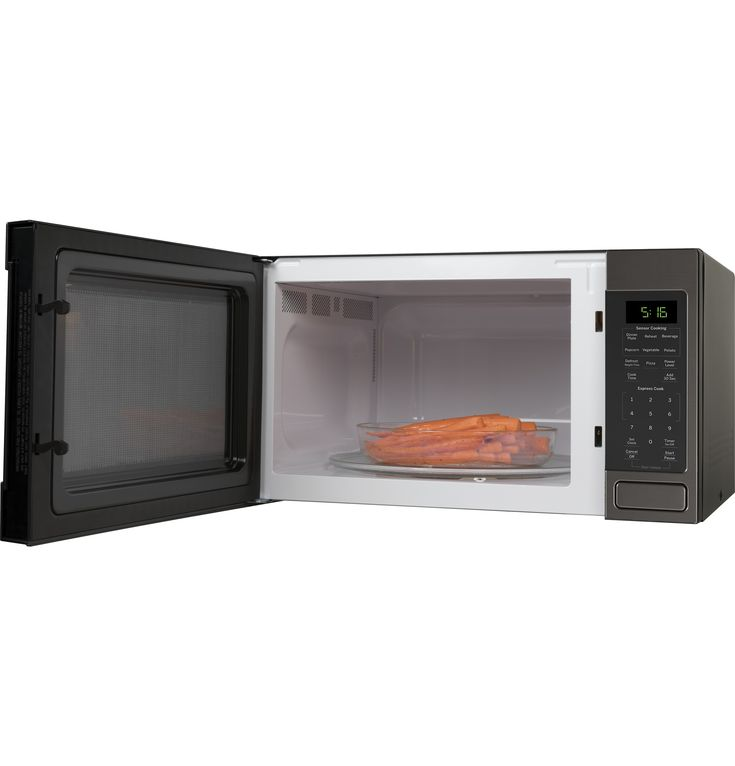
Fault manifestations: Aging of the door seal (rubber hardness > 90 Shore), deformation of the door hook (closing force < 15N), fatigue of the hinge spring (tension attenuation > 30%).
Solution:
When replacing the door seal, choose the original factory model and make sure it fits the door frame evenly during installation;
Calibration of the door hook requires adjustment of position to ensure accurate contact of the door opening and closing contacts;
Hinge maintenance requires checking spring tension and replacing high-strength springs if necessary.
4. Control Panel Failure and Smart Repair
Fault types: Key contact oxidation (contact resistance > 100Ω), display backlight failure (brightness attenuation > 50%), main control chip program disorder (function failure).
Solution:
Key cleaning: Wipe the contacts with anhydrous alcohol to restore contact performance;
Backlight replacement requires disassembling the panel and replacing the LED beads of the same model;
If the main control chip restarts, it can be powered off for 30 seconds and then powered on again. If it doesn’t work, contact after-sales service to reset or replace the motherboard.
5. The turntable does not rotate and drive system optimization
Causes of failure: Open circuit of the turntable motor winding (infinite resistance), wear of the drive gear (tooth surface wear > 0.5mm), deformation of the bracket (concentricity deviation > 1mm).
Solution:
Motor inspection requires testing the winding resistance value (normal value 50-200Ω), and replacement in case of open circuit;
Gear maintenance requires checking the wear of the tooth surface. When it is excessively worn, it should be replaced.
Bracket calibration requires adjusting the position to ensure smooth rotation of the turntable without jamming.
6. Control of Abnormal odors and smoke
Causes of contamination: burning of food residue (burnt smell), overheating of magnetrons (evaporation of insulating material), breakdown of high-voltage capacitors (arc discharge).
Solutions:
Focus on cleaning the waveguide port and turntable bracket with a special cleaning agent for the inner cavity;
Magnetron heat dissipation inspection should ensure that the cooling fan is running and clean the dust from the vent;
Capacitor maintenance requires checking the insulation of the leads, replacing and re-soldering if necessary.
Conclusion:
Mastering the scientific solutions to the six major faults of microwave ovens can not only extend the lifespan of the equipment, but also ensure the safety of household electricity and food health. Choosing scientific repair means choosing a lifestyle that perfectly combines technology, safety and quality of life.


