



How to Choose the Right French-Style Refrigerator

Summer in Boise and its surrounding areas like Meridian, Nampa, and Caldwell can be a delightful time for relaxation and enjoyment. At Appliances 4 Less Boise, we believe your home appliances can play a significant role in simplifying your summer activities. Here’s how you can leverage these tools to enhance your summer experience, even with appliances that are open box, scratch, and dented.
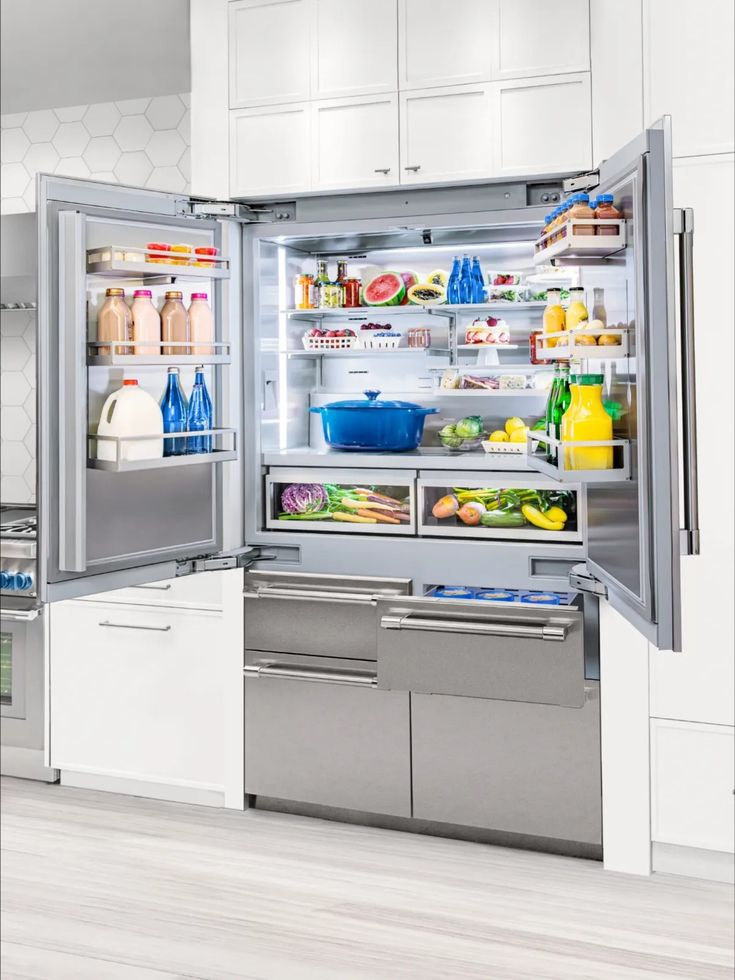
French-style refrigerators are like spatial magicians in the kitchen—the double-door design embodies symmetrical beauty, the tiered storage system weaves a poem of order, and the elegant appearance reflects a refined lifestyle. However, when consumers stand in the appliance store, faced with a range of capacities from 400 to 600 liters, depths varying from 60 to 90 cm, and the technical codes woven into energy efficiency labels, this spatial magic can become a dilemma: choosing a larger model can become a power-hungry beast, while choosing a smaller one can become a storage shackle. How can we break this “Gordian knot” in the modern kitchen?
1. Capacity Selection
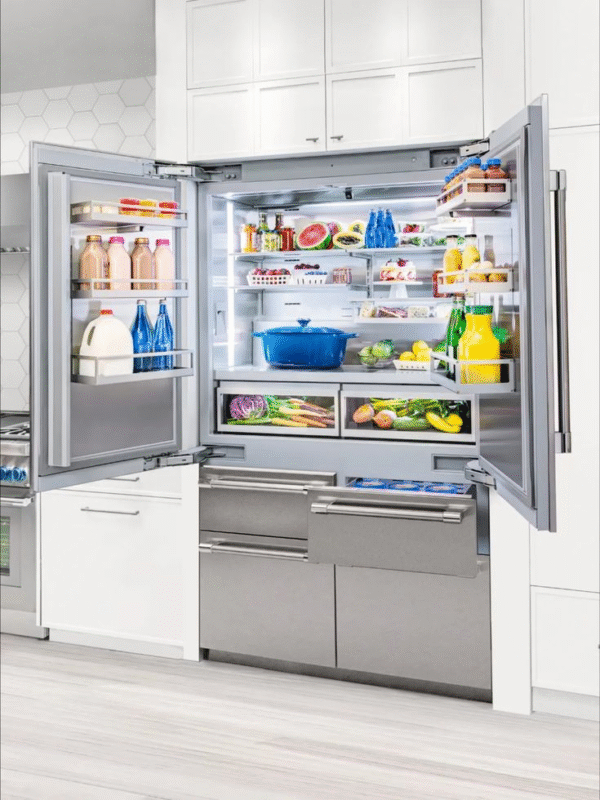
The capacity of a French-style refrigerator is closely related to the number of family members and their food consumption patterns.
①. Basic Capacity
For a family of three who buys fresh produce twice a week, it’s recommended to choose a refrigerator with a 200-250 liter refrigerator compartment (primarily for fruits, vegetables, dairy products, and ready-to-eat meals) and a 120-150 liter freezer compartment (for meat, frozen staples, etc.). For families with five or more: Choose a refrigerator with a refrigerator compartment capacity of 300 liters or more, and a freezer compartment capacity of 180 liters. Ideally, choose a variable-temperature compartment with a capacity of 10-20 liters for short-term curing, baby food, or wine storage.
②. Strengthening Functional Zoning
Refrigerator: Shelf spacing should support vertical storage of 2L beverage bottles, and drawer depths should be ≥30 cm to accommodate whole fish. Door bottle racks with three or more tiers are recommended to improve storage efficiency for small items.
Freezer: Drawers should have a single-layer load capacity of ≥15 kg to prevent deformation when storing whole poultry. Removable dividers should be provided for flexible storage space adjustment.
Variable-temperature compartment: The recommended temperature adjustment range is -18°C to 8°C, suitable for diverse needs, such as short-term curing at 0°C and wine storage at 4°C.

2. Size and Space
When choosing the size of a French-style refrigerator, consider both external adaptability and internal practicality to avoid reduced energy efficiency or operational difficulties due to poor space planning.
①. Compatible External Dimensions
Standard dimensions: 180-200 cm in height, 65-80 cm in depth, and 90-110 cm in width.
For built-in installations: Allow 5 cm at the top, 10 cm at the back, and 2 cm on the sides for heat dissipation to prevent compressor overheating and energy efficiency loss.
For open kitchens: Prefer models with a depth of 70 cm or less to ensure the cabinet is flush with the refrigerator door, maintaining a clean and uncluttered visual space.
②. Innovative Internal Structure
Layout Design: Adopt a “top-refrigerator, bottom-freezer” model with at least three bottle racks in the refrigerator door and removable dividers in the freezer drawer. For bi-fold door designs, ensure that one side of the door opens at least 90 degrees to prevent the drawer from being unable to fully extend.
Technical Optimization: Top-mounted compressor technology can increase freezer depth (for example, one brand has achieved an 8 cm increase in depth through this design), increasing storage capacity by 15% while maintaining the same external dimensions.

3. Energy Efficiency Grade and Power Consumption
Energy efficiency selection should go beyond labeling and consider the actual impact of variable frequency technology, temperature sensing systems, and other factors on long-term operating costs and preservation effectiveness.
①. Energy Efficiency Label Analysis
Grading Standards: The China Energy Efficiency Label is divided into Levels 1-3. Level 1 energy efficiency models have an overall power consumption 25%-30% lower than Level 3 models.
Actual Operating Conditions: Energy efficiency testing is based on standard conditions of an ambient temperature of 25°C, a refrigerator compartment of 4°C, and a freezer compartment of -18°C. High summer temperatures may result in actual energy consumption increasing by 15%-20%.
②. Core Technology Drives Energy Savings
Variable Frequency Compressor: By adjusting speed to match load demand, it achieves 40% energy savings compared to fixed frequency models, controlling temperature fluctuations to within ±0.5°C and extending food preservation.
Intelligent Temperature Sensing System: Equipped with multiple temperature sensors, it automatically increases cooling power and shortens temperature recovery time in response to frequent door openings and large amounts of food being placed. Laboratory data shows that this technology can reduce daily power consumption by 0.3 kWh, equivalent to reducing annual CO2 emissions by 120 kg.


