



The refrigerator’s preservation effect is not good?

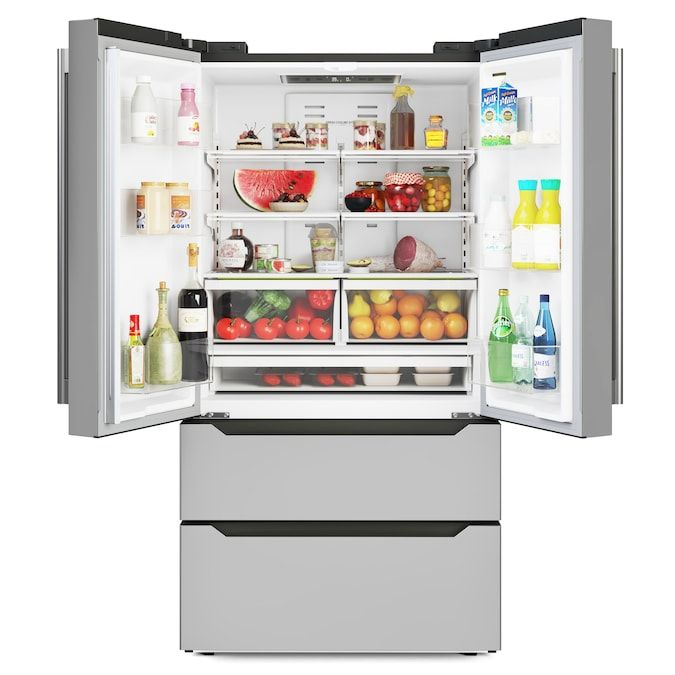
Summer in Boise and its surrounding areas like Meridian, Nampa, and Caldwell can be a delightful time for relaxation and enjoyment. At Appliances 4 Less Boise, we believe your home appliances can play a significant role in simplifying your summer activities. Here’s how you can leverage these tools to enhance your summer experience, even with appliances that are open box, scratch, and dented.
Refrigerators, as the core terminal equipment of the household food cold chain system, not only depend on the manufacturing process of the whole machine and the performance of the core components, but also rely more deeply on the scientific use, dynamic regulation and systematic maintenance at the user end.
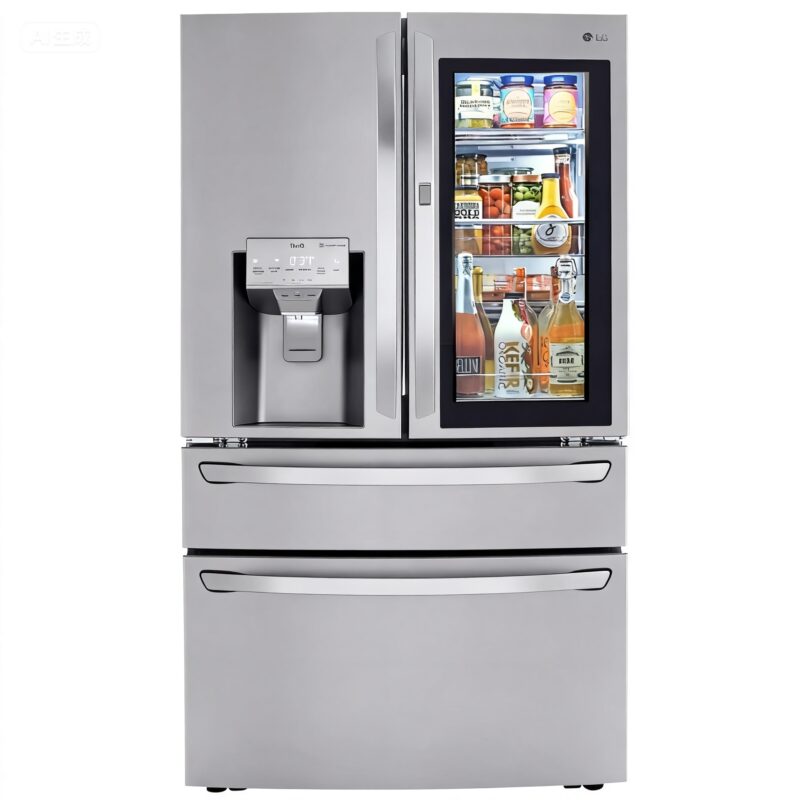
1. Diagnosis of the Core mechanism of the decline in preservation efficiency
(1) Imbalance in temperature field distribution
There is an inherent temperature gradient inside the refrigerator: the upper layer of the fresh-keeping compartment (≤15 cm from the top plate) is a stable zone for cold air settling, with a measured temperature constant at 2-4 ° C, suitable for storing yogurt, ready-to-eat cooked food and dairy products; The middle layer (15-35 cm) is a transitional temperature range of 4-6 ° C, suitable for leafy vegetables, berries and short-shelf-life cheeses; The lower layer (≤10 cm from the base) is significantly affected by the heat from the door opening, with a temperature fluctuation of 6-8 ° C, and is suitable for storing eggs, root vegetables and other storage-resistant foods. The freezer should maintain a stable low-temperature environment of ≤ -18 ° C for a long time; If the frost thickness on the evaporator is greater than 5 mm, it will result in a 0.12 m²·K/W increase in thermal resistance coefficient, a 31.2% decrease in measured refrigeration efficiency, and a 15.7% increase in unit energy consumption. Accelerated life tests show that for every 10mm increase in frost thickness in the freezer, the average daily operating time of the compressor increases by 22.4%, repeated freeze-thaw cycles increase the cell membrane rupture rate to 68.3%, directly resulting in a 42% increase in water loss rate and a 35% decrease in vitamin C retention rate.
(2) Failure of humidity field and air flow organization
The relative humidity in the refrigerated compartment needs to be precisely zoned and regulated: excessive humidity (> 80% RH) can induce the germination of mold spores and the formation of bacterial biofilms, accelerating the spoilage process; Too low humidity (< 40% RH) intensifies transpiration and water loss of fruits and vegetables, causing the wilting index to rise to a critical threshold (WI > 0.8). It is recommended to activate the fresh-keeping drawers with independent humidity control valves – set the humidity for leafy vegetable storage at 70-80%RH and for fruit storage at 60-70%RH, and calibrate the humidity sensors regularly (error tolerance ± 3%RH). The aging and deformation of the door seal will cause the seal to fail. Wind tunnel test data shows that when the linear compression deformation is less than 0.3mm, the cold air leakage rate rises to 1.8L /min, the temperature fluctuation in the refrigerator compartment is ±3.2 ° C, and the E. coli breeding generation time is shortened to 18.7 minutes (2.1 times faster than in a perfectly sealed state).
(3) Food storage logic and risk of cross-contamination
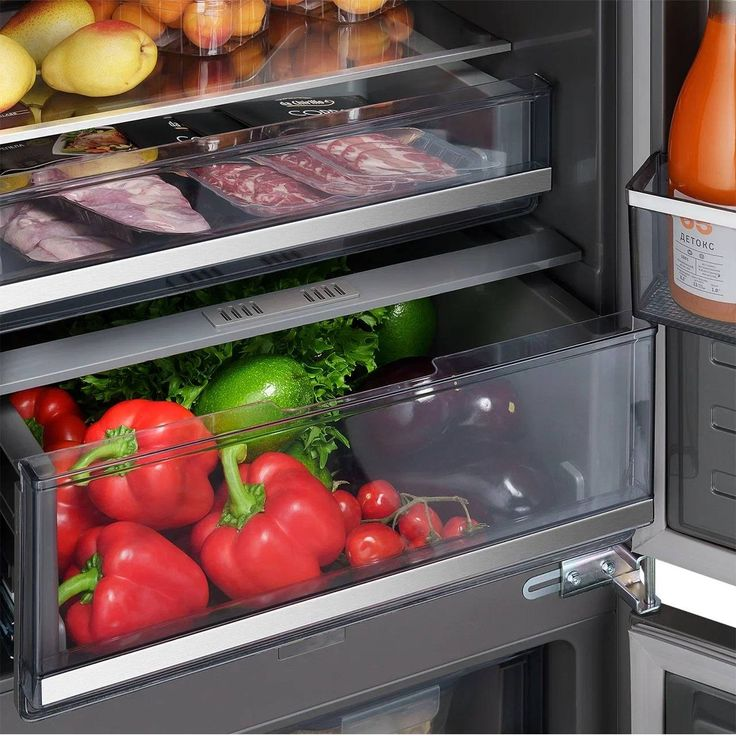
Mixed storage of raw and cooked foods creates high-risk scenarios for microbial cross-contamination. For example, Salmonella carried in raw poultry meat can migrate to ready-to-eat cooked food surfaces through condensation droplets or contact surfaces, increasing the contamination probability to 76%. Proper storage should follow the principle of “vertical layering, physical isolation, directional airflow” : raw food (including fresh meat and aquatic products) should be placed in the bottom drawer of the refrigerator compartment. Cooked food, or ready-to-eat food, is stored in upper sealed containers; Ethylene-releasing fruits and vegetables (apples, bananas, tomatoes) should be spatially separated from ethylene-sensitive ingredients (green leafy vegetables, broccoli, carrots), with a minimum spacing of at least 30 cm. An air gap of at least 10 mm should be left between all ingredients to ensure that the cold air penetration rate is greater than 92% under forced convection conditions; Insufficient gaps will cause the local microenvironment temperature to rise by 2.4-3.1 ° C, resulting in a 3.8-fold increase in the growth rate of Listeria.
2. Scientific operation and control strategies
(1) Dynamic temperature parameter setting
Graded regulation based on ambient temperature changes: When ambient temperature is above 32 ° C in summer, it is recommended to set the temperature control gear of the refrigeration compartment to 2-3 gear (corresponding to the average temperature of the evaporator 4.1±0.3 ° C); When the ambient temperature is less than 10 ° C in winter, set it to 5-6 (corresponding to the average temperature of the evaporator 0.2±0.4 ° C) to avoid triggering the false start of the compensating heater due to an overly cold environment. Tropical fruits (bananas, mangoes, avocados) must not be refrigerated. The cold damage reaction induced by low temperature will cause the skin Browning index (BI) to rise to 4.7 (out of 5) within 48 hours and cause abnormal increase in amylase activity, accelerating sugar conversion and nutrient loss; Honey, chocolate and other high-sugar/high-fat foods should be stored at 15-25 ° C away from light. The low-temperature environment will induce sucrose crystallization (for honey) and cocoa butter phase separation (for chocolate), reducing the sensory score by 2.3 grades.
(2) Specifications for pre-treatment and packaging of ingredients
The bulk ingredients should be pre-divided into single-use specifications (≤ 300g) and vacuum-packed with food-grade PE cling film, which can increase the cooling rate by 47% and reduce the surface dehydration rate caused by cold air disturbance. Leftover food should be cooled to a core temperature of ≤30 ° C (verified with an infrared thermometer) before being placed in the cabinet to avoid thermal load shock causing the instantaneous humidity inside the cabinet to soar to 95%RH, which would induce condensation accumulation and rapid proliferation of psychrophilic bacteria such as Yersinia. Eggs should be stored vertically with the large end up on a dedicated egg rack, using the principle that the air chamber naturally rises to delay water evaporation. After 7 days of measurement verification, the shelf life is extended by 11-14 days and the decay rate of Haff units (HU) is reduced by 39%.
(3) Energy efficiency optimization and periodic defrosting procedures
Check the drainage holes monthly. Blockage will cause defrosting water to flow back and freeze at the bottom of the evaporator, increasing the daily power consumption of the compressor by 12.6% under this condition. The controlled temperature difference defrosting method is recommended: after the power is cut off, a stainless steel basin (volume ≥ 1.5L) filled with 60±2 ° C hot water is placed at the bottom of the refrigerator compartment. By taking advantage of the combined effect of heat conduction and latent heat of phase change, the frost layer is completely softened within 10 minutes. The defrosting efficiency is 53.2% higher than that of mechanical scraping, and there is no risk of damaging the aluminum foil of the evaporator. The inner tank is recommended to be wiped with a citric acid solution (3% concentration) with pH 4.5-5.5. This weakly acidic environment can dissolve the residual alkaline protein and inhibit the germination of mold spores. The surface microbial load is reduced to < 10 RLU/cm² as detected by ATP bioluminescence.
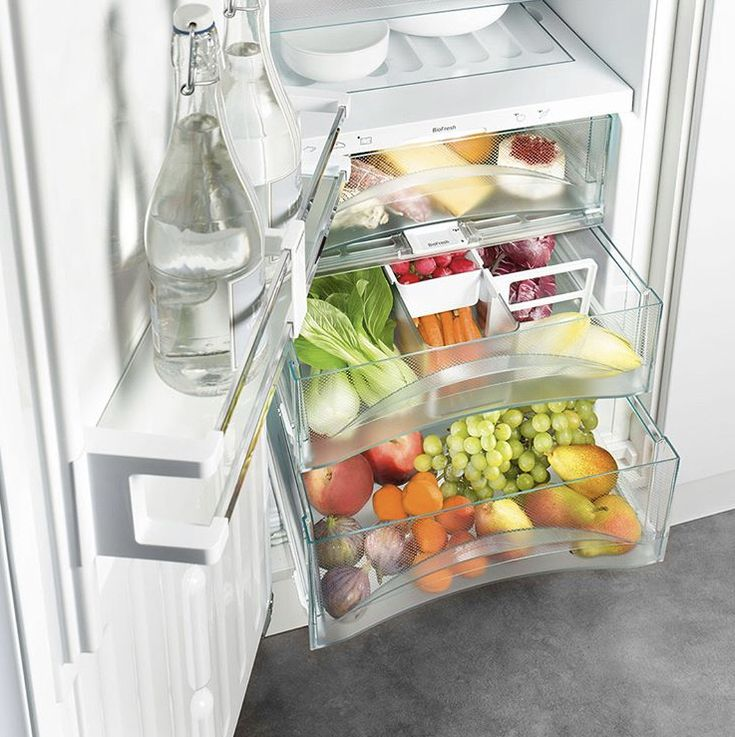
3. Systematic Maintenance Plan for the Entire Life Cycle
(1) Deep maintenance of the heat exchange system
Perform condenser and evaporator cleaning quarterly: When the dust accumulation thickness reaches 1 mm, the heat transfer coefficient of the condenser decreases by 15.3%, and the overall energy efficiency ratio (EER) decreases by 0.82 W/W; It is recommended to use a soft-bristled brush (bristle hardness ≤300 MPa) in conjunction with an industrial-grade vacuum cleaner (negative pressure ≥20 kPa). Do not use hard tools such as metal scrapers or sandpaper to prevent fin deformation or perforation of aluminum tubes. The door seal strip should be wiped in one direction along the sealing lip with 75% medical alcohol cotton pads every month to restore the elastic modulus of the material to 94.6% of the initial value and reduce the sealing leakage rate to 0.35L /min.
(2) Monitoring of core component status and intelligent upgrade
When the no-load noise of the compressor is greater than 45 dB(A) (A-weighted measurement at 1 m away from the equipment), or the standard deviation of the temperature fluctuation in the refrigeration room is greater than 1.2 ° C for 7 consecutive days, A third-party institution must be entrusted to test the refrigerant charge (R600a standard value: 95±5 g) and the compressor exhaust pressure (normal range: 0.18-0.22 MPa). For models that have been in service for more than 8 years, an Internet of Things (iot) temperature control module can be installed to achieve real-time collection of temperature at multiple points inside the cabinet (sampling interval ≤30 s), ±0.4 ° C closed-loop regulation and automatic early warning of abnormal temperature rise. The measured annual comprehensive energy saving rate is 21.3%.
(3) Optimization of consumables management and storage capacity
The activated carbon filter needs to be replaced every 90 days, and the removal rate of hydrogen sulfide in the saturated adsorption state is reduced to < 12% (98.7% for the new filter). Do not store flammable and explosive items such as disinfectants, lighters, and spray cans with an alcohol volume fraction of more than 75% in the refrigerator. The lower explosive limit (LEL) of the volatile gas is only 1.8% vol when exposed to an electric spark in a confined space. The loading rate should be strictly controlled within the range of 70-80% of the rated volume: when the loading rate is less than 70%, the heat capacity inside the cabinet is insufficient, causing greater temperature fluctuations; More than 80% hinders forced convection, with the measured cold air flow cross-sectional area reduced by 37% and the compressor start-stop frequency increased by 2.6 times.
Conclusion:
The essence of the refrigerator’s preservation efficiency is the dynamic coordinated control process of the three physical fields of “temperature field, humidity field, and air flow field”. Any loss of control in a single dimension will trigger a chain of degradation. Only by establishing operating procedures based on standard validation, dynamic regulation mechanisms based on measured data, and preventive maintenance systems covering the entire life cycle of equipment can the microbial safety, nutritional integrity and sensory quality stability of food be effectively guaranteed.


