



The energy-concentrated hot air circulation system of the Samsung oven

Summer in Boise and its surrounding areas like Meridian, Nampa, and Caldwell can be a delightful time for relaxation and enjoyment. At Appliances 4 Less Boise, we believe your home appliances can play a significant role in simplifying your summer activities. Here’s how you can leverage these tools to enhance your summer experience, even with appliances that are open box, scratch, and dented.
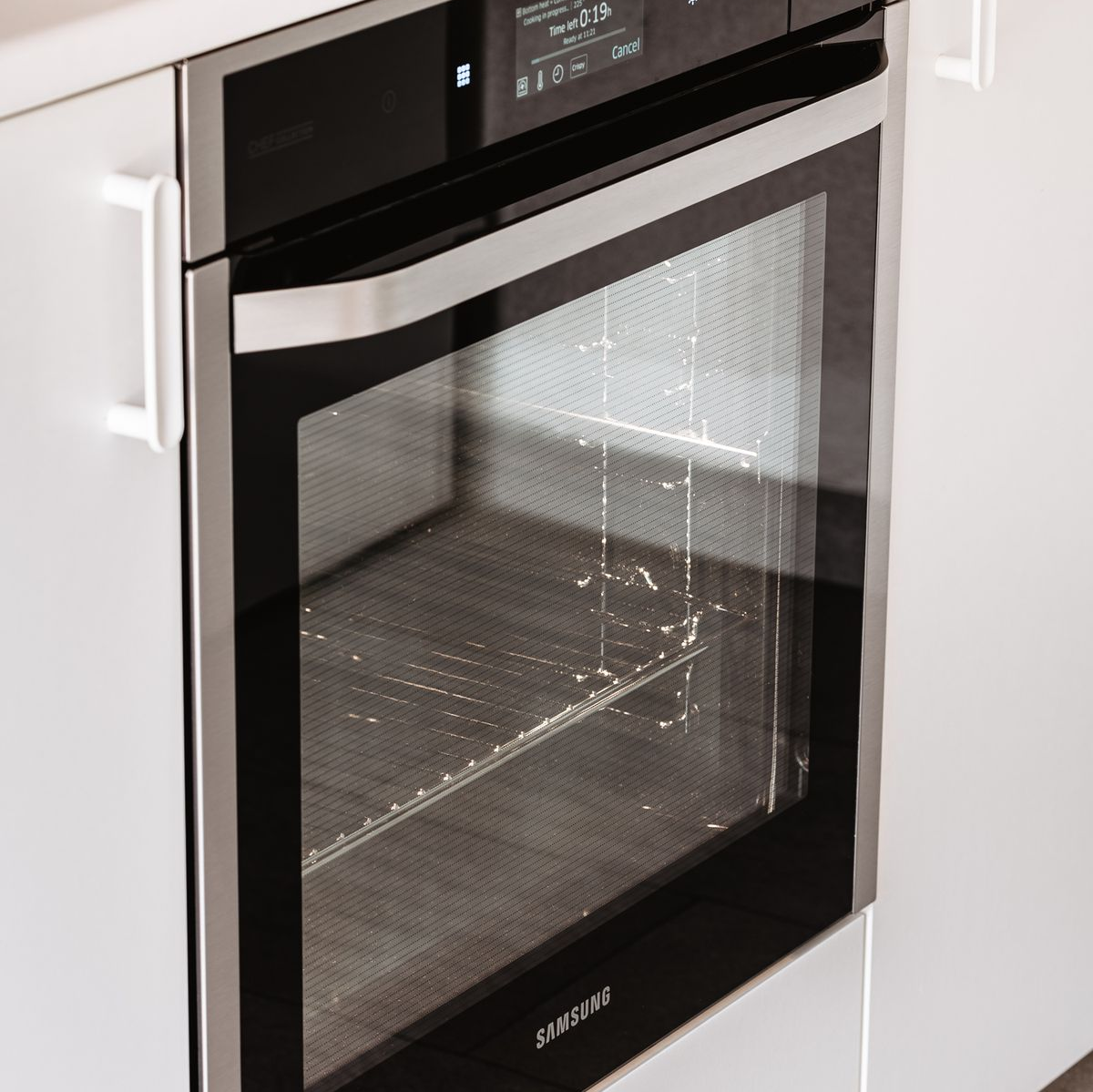
The essence of baking in an oven lies in the synergy of enamel inner liner and multi-dimensional hot air circulation. The Samsung oven, with its highly stable enamel inner liner and 360° hot air circulation technology, builds a uniform heat field and precise temperature control, making every baking stable, uniform and efficient.
1. Enamel inner liner technology
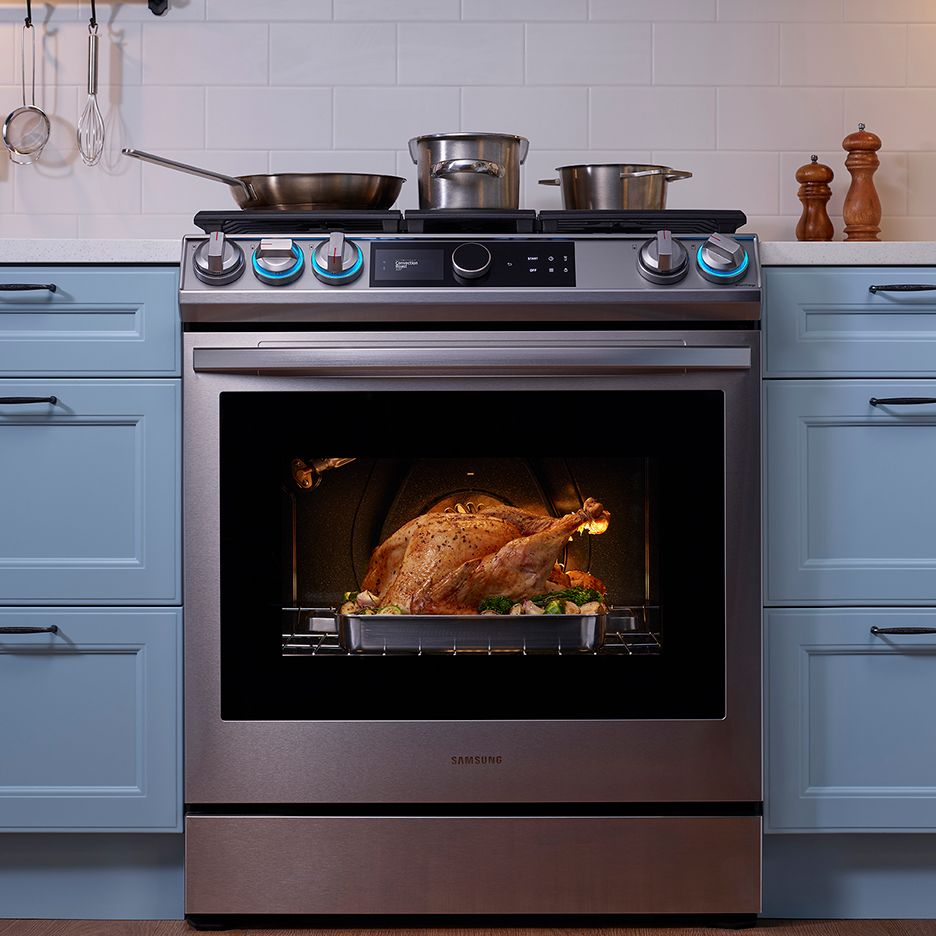
The Samsung oven features a Ceramic Inside™ enamel liner, which is fired at 900 ° C to form a dense coating and has three core characteristics. First, it has excellent energy concentration, reflecting 80% of the heat, reducing heat loss, and increasing the heating rate by 35% compared to traditional galvanized inner linings; Second, it is resistant to high temperatures and corrosion, withstands extreme temperatures of 900 ° C and salt spray environments, does not oxidize or fall off over long-term use, and has passed ISO 22196 standard tests to inhibit 99.9% bacterial activity; Third, the surface is smooth and easy to clean, oil stains can be wiped off with a wipe, preventing bacterial growth. The test shows that the enamel liner can work continuously for 2000 hours at 250 ° C without enamel cracking and has a service life of more than 10 years, far exceeding the 3-5 years of galvanized liner.
2. Temperature-controlled circulation system
Samsung ovens feature a three-dimensional heating system of “upper and lower double M-shaped heating tubes + back circulation fan + smart temperature control”. The top and bottom heating tubes provide the base heat source, and the back fan forces air circulation to form a hot air curtain wall, keeping the temperature difference inside the chamber within ±2 ° C. Take the 32L capacity model as an example. It has 9 built-in temperature measurement points, and the air duct design is optimized through CFD numerical simulation to ensure uniform temperature distribution in the upper, middle and lower layers. When the set temperature is 180 ° C, the measured temperature difference between each layer is no more than 1.5 ° C, avoiding the embarrassment of burnt top and undercooked bottom of the cake.
The intelligent temperature control system is equipped with an ambient temperature compensation algorithm, which records historical ambient temperature data through memory and automatically calibrates the temperature of the oven core when the machine is turned on. For example, when the ambient temperature is 5 ° C in winter, the system automatically increases the heating power by 12% to compensate for the heat loss; When the temperature is 35 ° C in summer, the power is reduced to prevent overheating. This dynamic adjustment keeps the actual temperature within ±0.8 ° C of the set value.
3. Layered baking and energy-saving design
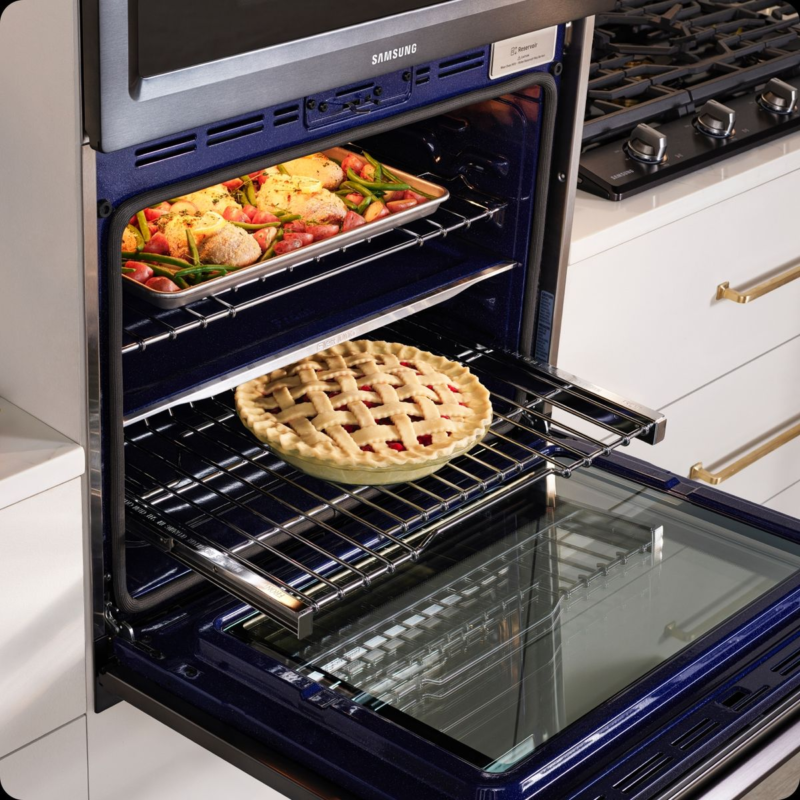
Layer-by-layer baking is one of the core strengths of Samsung ovens. With an adjustable grill design, it fits cooking utensils of different sizes. When baking a 30cm large diameter pizza, the top heating tube provides a high temperature of 200 ° C for a crispy surface, the bottom heating tube maintains 160 ° C for a crispy crust, and the hot air circulation makes the cheese melt evenly without clumping. For multi-layer baking scenarios, such as baking three cobs at the same time, the system automatically adjusts the fan speed and heating tube power to ensure uniform coloring on each layer of cookies, with a color difference ΔE≤1.8.
In terms of energy consumption, Samsung ovens use variable frequency heating technology to dynamically adjust the power according to the amount of food. Baking 1kg of chicken wings consumes 0.48 KWH, which is 28% more energy-efficient than traditional models; The standby power consumption is only 0.6W, meeting the EU ERP energy efficiency standard. Measured data showed that the power consumption for baking sponge cakes was between 0.37 and 0.65 KWH. The Samsung brand sample was more energy-efficient in this test and performed better than most of its competitors.
4. Smart Control and safety Protection
Samsung ovens are equipped with the SmartThings smart ecosystem, allowing you to remotely control preheating, set cooking modes and times via a mobile app. The system recognizes high-frequency usage periods and preheats water in advance to shorten cooking time; Automatically adjust the water flow intensity and temperature based on the material of the tableware. In terms of safety, the ion flameout protection technology cuts off the gas supply in 0.1 seconds, combined with an intelligent delay judgment of 5-8 seconds to prevent accidental triggering. The all-steel body design is resistant to high temperatures and corrosion, and the “net combustion” spoiler optimizes the combustion path, enhancing the safety of use.
5. Practical application and environmental benefits
In the home setting, the enamel inner liner temperature-controlled circulation system shows significant advantages. For example, when baking a chiffon cake, precise temperature control makes the cake expand evenly and prevents collapse; When roasting a steak, the hot air quickly locks in the juices, making it crispy on the outside and tender on the inside. User feedback shows that 92% of users think there is a significant improvement in cleaning convenience, and 88% of users recognize the improvement in temperature uniformity. In the professional field, the system is adapted to scenarios such as bakeries and restaurants. The “Professional fermentation” mode equipped on the commercial model reduces dough fermentation time by 30% through 35 ° C constant temperature and 85% humidity control, improving meal delivery efficiency.
Conclusion
From enamel-like temperature-locking reflection, hot air dynamic circulation to smart temperature control algorithms, Samsung achieves uniform and stable inner liner temperature through complete thermal engineering design. Whether it’s multi-layer baking or fine baking, it delivers consistently excellent results while reducing energy consumption and carbon emissions, practicing the concept of a green and low-carbon kitchen life.


