



Key factors in material selection of oven baking tray

Summer in Boise and its surrounding areas like Meridian, Nampa, and Caldwell can be a delightful time for relaxation and enjoyment. At Appliances 4 Less Boise, we believe your home appliances can play a significant role in simplifying your summer activities. Here’s how you can leverage these tools to enhance your summer experience, even with appliances that are open box, scratch, and dented.
On a weekend afternoon, the smell of caramel wafts from the kitchen, and as you stand in front of the oven, your mouth rises as you watch the cookies turn golden inside the glass door. But when it came time to remove the pan, the fingers were pulled back by the hot metal edges-it turns out that the material of the pan not only affects the flavor of the food, but also the safety and efficiency of cooking. The choice of baking pan material, has long gone beyond durable or beautiful surface requirements, it is a comprehensive game involving heat conduction, chemical stability and space aesthetics. Next, I’ll introduce you to a few key factors to consider when choosing a baking pan material.
1.Thermal conductivity
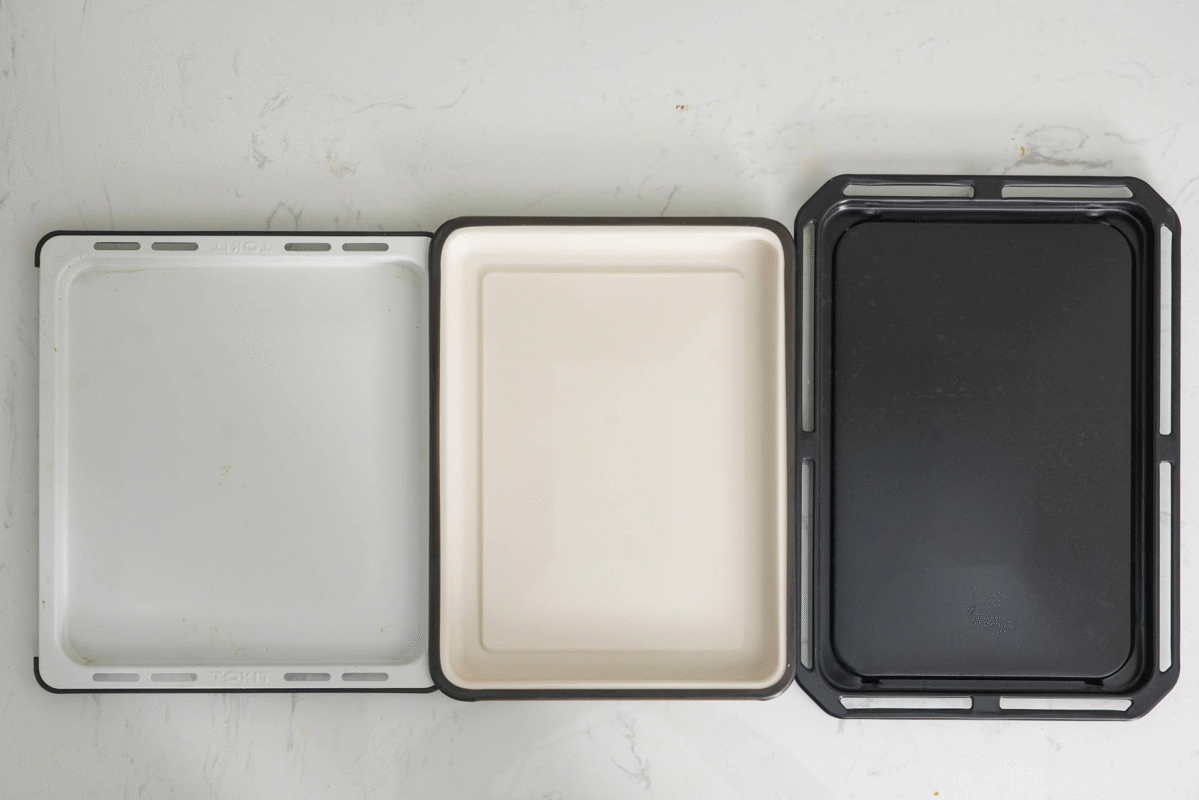
The heat conduction performance of baking tray is essentially the comprehensive performance of heat conduction ability and uniformity of material. Metal baking trays (e.g. aluminum, stainless steel) with high thermal conductivity can transfer the heat of the oven to the surface of the food quickly, forming a crispy shell while locking the moisture inside. Ceramic and glass baking trays, on the other hand, conduct heat more slowly but have a larger heat capacity. They can release heat steadily and avoid local overheating. They are more suitable for cheesecake or vegetable casseroles that require slow and even heating. The choice of thermal conductivity depends on the Dynamic equilibrium of food properties and cooking time.
2.High temperature resistance
Oven internal temperature often up to 230 °C above, the baking tray to undergo high temperature hardening without deformation, do not release harmful substances. High-quality metal baking pans are anodized or carbon steel and can withstand temperatures up to 500 °C with low Coefficient of thermal expansion, reducing the risk of deformation due to temperature differences. Ceramic baking trays should be fired at a high temperature (above 1200 °C) with a dense non-porous glaze to avoid cracking at high temperatures, while glass baking trays should be made of borosilicate material, which is only 1/3 the Coefficient of thermal expansion of ordinary glass, able to withstand-40 °C to 300 °C temperature change. High temperature resistance is not only the bottom line of safety, but also the core index of baking pan service life.
3.Corrosion resistance and rust resistance
Pan long-term contact with food acidic substances (such as lemon juice, tomato sauce) or salt, prone to corrosion reaction. Because of containing chromium (≥10.5%) , the stainless steel baking pan forms a dense chromium oxide protective layer on the surface, which can effectively resist acid and alkali corrosion, and is suitable for baking seafood or fruit pie. And ordinary carbon steel baking tray if not done galvanized or enamel treatment, easy to rust in a humid environment, rust particles may be mixed into food, health hazards. When choosing, observe whether the surface of the baking tray is smooth and non-porous, or check whether the product description says”Food grade 304 stainless steel” or”Acid and alkali resistant enamel coating”.
4.Surface treatment and coating
Modern baking trays use surface treatment technology to overlay practical functions on top of basic materials. Non-stick coatings (e. g. Teflon) can reduce the surface energy to prevent food from sticking and improve cleaning efficiency by more than 50% , but high temperatures (> 260 °C) should be avoided to prevent coating decomposition. Enamel baking plate will be sintered in the glass glaze metal substrate, both rust and easy to clean, but also directly on the table as tableware use. Silicone baking tray with flexible material, foldable storage, and temperature range of -40 °C to 230 °C, suitable for making frozen desserts or children complementary food. The choice of surface treatment should take into account both functional requirements and usage scenarios.
Conclusion
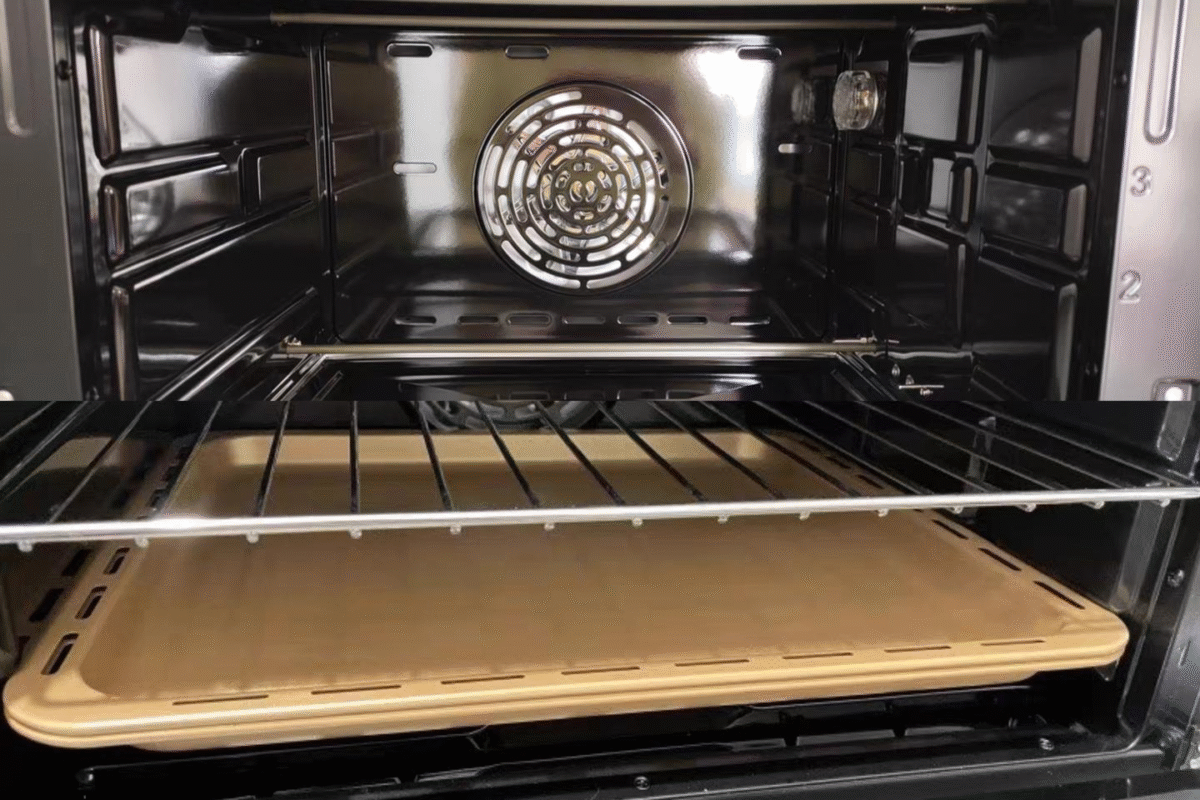
The choice of the baking tray material of the oven is an interweaving of scientific logic and life aesthetics. When the oven lights come on and the pans dance with the food, we see not only the transfer of heat, but also a warm dialogue between technology and humanity-making every choice a tribute to the good life.


